What Were the Stonewall Riots?
Before Pride parades. Before rainbow flags. Before global celebrations — there was a riot. The Stonewall Riots mark one of the most pivotal moments in LGBTQ+ history. On the night of June 28, 1969, at the Stonewall Inn in New York City, queer people stood up against decades of police harassment, refusing to be silent any longer.
The Stonewall Inn wasn’t glamorous — it was a mafia-owned dive bar that served as a rare, crucial refuge for LGBTQ+ people. In an era when being out was a risk to your freedom and your life, spaces like the Stonewall Inn mattered more than most realise today.

Stonewall Inn 1969 (Colourised)

Stonewall Inn Modern Day
Why Was Stonewall So Important?
In the 1960s, it was illegal to serve alcohol to LGBTQ+ people. It was illegal to wear “too many” clothes of the “wrong” gender. It was even illegal to dance with someone of the same sex. The police regularly raided places like the Stonewall Inn, humiliating, beating, and arresting anyone they deemed “different.”
Raids were common, and the so-called “three-article clothing rule” — requiring at least three pieces of gender-conforming clothing — was used to terrorise queer communities. But that night in 1969? The community fought back — and changed history forever.
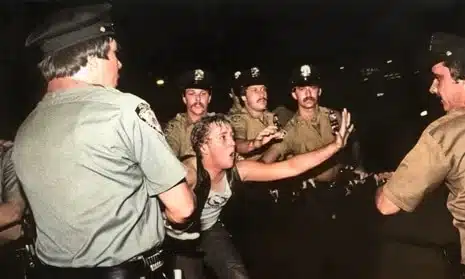
Police Arrests at Stonewall Inn (Colourised)

Police Arrests On The Streets (Colourised)
The Spark That Lit a Revolution
No one knows exactly who threw the first punch during the Stonewall uprising. But legends speak of fierce figures like Marsha P. Johnson and Sylvia Rivera, two trans women of colour who stood at the frontlines. Bottles were thrown. Crowds gathered. The streets of Greenwich Village filled with anger, resilience, and hope.
In those chaotic nights, the community realised something powerful: fighting back wasn’t just necessary — it was survival. And survival could look like resistance.

Photo of Marsha P. Johnson and Sylvia Rivera
Stonewall Was a Riot — Not a Party
Today, it’s easy to see Pride as a celebration — and it absolutely is. But it’s important to remember that Pride was born from rage and resilience. The first marches in 1970, like the Christopher Street Liberation Day march, weren’t about floats and sponsorships. They were about demanding the right to live, love, and exist without fear.
Those early activists weren’t just celebrating — they were surviving. Every chant, every step down the street was an act of open rebellion against a world that wanted them invisible.

First Pride March, 1970 (New York City) (Colourised)

Pride March 1970 (Colourised)
The Lasting Impact of the Stonewall Riots
The Stonewall Riots didn’t magically change laws overnight. But they ignited a movement. LGBTQ+ organisations like the Gay Liberation Front and the Gay Activists Alliance rose quickly after 1969, pushing for rights, visibility, and pride at every turn.
The energy of the 1969 Stonewall Inn uprising rippled outward — inspiring protests, legal fights, and advocacy that would eventually lead to the decriminalisation of homosexuality in many countries, the creation of Pride events globally, and a world where “queer” could be a word of power, not just insult.

Remember: Pride Is Protest
As you celebrate Pride, remember: the rainbow was born from resistance. Pride events trace their roots back to a bar full of misfits who dared to say: “No more.”
Stonewall wasn’t polite.
Stonewall wasn’t easy.
Stonewall was powerful.
And it changed LGBTQ+ history forever.
👉 Explore more unforgettable moments on our LGBTQ+ History page.


